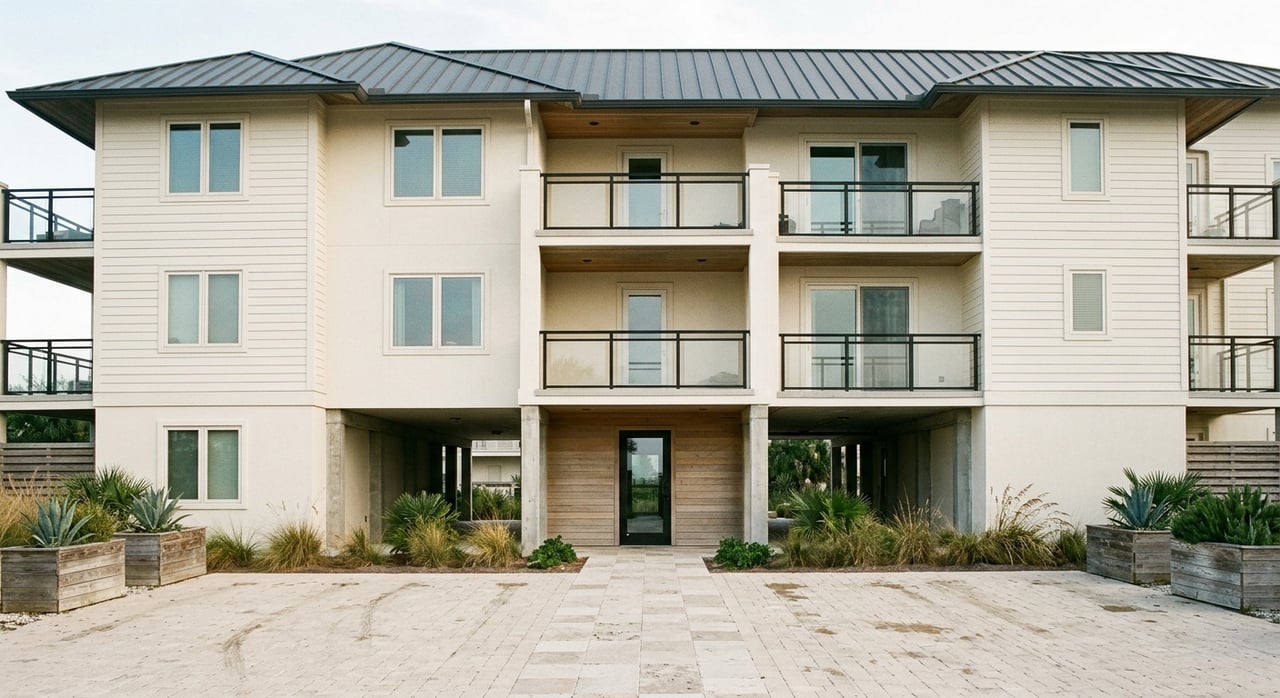
What separates a solid beach house from a standout performer in Seacrest? If you are eyeing rental income along 30A, the right mix of compliance, location, layout, and amenities matters more than any clever listing title. You want a property guests love, regulators approve, and numbers support all year.
In this guide, you will learn how local rules shape capacity, which Seacrest features drive bookings, what revenue patterns to expect, and how to evaluate a property before you buy. You will also get a practical checklist you can use on day one. Let’s dive in.
Start with compliance and taxes
Before style or staging, a strong short-term rental in Seacrest begins with local compliance. Walton County requires most single-family short-term rentals to obtain and renew a Short-Term Vacation Rental Certificate. The county outlines the process, standards, and fees on its registration portal. Review the program details and application steps on the county’s Short-Term Vacation Rental Certification page to understand what is required for approval and renewal. Walton County’s certification portal explains the process.
Two rules affect your actual rentable capacity:
- Occupancy is computed from gross living area at 150 square feet per person, unless the county sets a lower limit during certification.
- Parking must meet minimum off-street standards. A common standard is one parking space per 900 square feet of gross floor area. For new construction, a one space per six occupants rule also appears. You cannot count non-deeded on-street spaces toward the minimum. These rules are set in the county’s neighborhood compatibility ordinance. Review the ordinance language on occupancy and parking.
Taxes are also part of the foundation. Seacrest is in the South Walton Tourist Development Tax district, which sets a 5 percent TDT. When combined with Florida state and local sales taxes, your typical short-stay rental tax burden is about 12 percent. The county reminds owners that platforms do not automatically remit Walton County TDT for you, so you must register and remit through the county’s portal unless you have a specific agreement. See the county’s Tourist Development Tax guidance.
At the state level, confirm whether your property needs a Florida DBPR vacation-rental license under Chapter 509. This covers transient public lodging and life-safety standards. A county page that summarizes state licensing is a useful starting point. Review the DBPR vacation-rental licensing overview.
Location and amenities that win bookings
In Seacrest, the package of walkability, beach access, and resort-scale amenities is a real driver of nightly rate and conversion.
Beach access and walkability. Seacrest Beach has deeded beach access at the neighborhood entrance, with boardwalk and seasonal tram service. Being able to market a short, walkable route to a deeded crossover is a clear booking advantage over homes that rely on busy public access lots. See the Seacrest HOA overview of beach access and tram.
Resort-scale pool and services. Seacrest’s centerpiece is a large lagoon pool cited at about 378,000 gallons, with year-round hours. Paired with the tram, on-site café, and beach services, this reduces friction for families and helps homes maintain stronger occupancy across peak and shoulder seasons. Confirm amenity details in the HOA’s community summary.
Amenities guests actually search for. Industry data highlights that pools, air conditioning, fast Wi-Fi, and a washer/dryer are among top filters for travelers. Premium features such as a private pool, hot tub, and direct or deeded beach access often justify meaningful nightly premiums in beach markets. Align your listing’s amenity claims with what the HOA allows and any guest access fees. See a national summary of top-booked amenities.
Layout, capacity, and parking
The Seacrest guest profile skews toward families and groups. The active inventory leans into 3 to 4 bedroom whole-home listings that sleep 6 to 8 or more. Homes in that range often outperform smaller units during peak windows because they match how people travel to 30A. Use market analytics and owner P&Ls before you underwrite a deal. Review a third-party snapshot for Seacrest.
Capacity is not just about bed count. It must align with county occupancy and parking rules, your deeded spaces, and HOA limits. As noted earlier, Walton County does not allow you to rely on non-deeded on-street spaces to meet required minimums. If the lot cannot support enough on-site parking for your target occupancy, your certificate could cap it lower or you may need permitted improvements.
Golf carts and LSVs are popular across 30A but come with rules. Low-speed vehicles must meet Florida equipment and registration standards, and local guidance maps where they are allowed. Many HOAs restrict guest carts or outside rentals. Verify the rules before you market a cart or build your guest logistics around one. Read Walton County’s LSV guidance.
Revenue patterns to plan for
30A is seasonal. Peak revenue typically runs from spring break through summer, with strong weeks in March and June through August. Shoulder seasons in April to May and September to October remain marketable, while November through February often softens. Many managers set week-long minimums in summer and adjust down in the shoulder and off-season. Price and plan cleaning capacity around that calendar. See a local guide to setting seasonal rates on 30A.
When you compare 30A submarkets, third-party analytics show Seaside and Alys Beach can command higher ADRs, while Seacrest competes strongly on occupancy and family demand thanks to the lagoon pool, tram, and beach access. One snapshot for Seacrest shows a modeled average ADR around $594 and modeled average occupancy near 44 percent. Treat public snapshots as directional. Underwrite with paid data and actual owner P&Ls to reflect your specific home, amenities, and policies. Review Seacrest’s modeled performance context.
Buyer due-diligence checklist
Use this list to quickly spot strengths, gaps, and deal-breakers.
Local legal status and taxes
- Get the Walton County Short-Term Vacation Rental Certificate number and copies of the current certificate. Verify status on the county portal. Start at the county’s certification page.
- Confirm TDT registration and proof of remittance with the Walton County Clerk. Platforms do not automatically remit county TDT for you. Review the county’s TDT portal and rules.
- Check whether a Florida DBPR vacation-rental license applies for your property type and configure life-safety accordingly. Use this state-licensing overview.
HOA and community rules
- Request the declaration, bylaws, design code, rental rules, estoppel letter, and recent meeting minutes. Confirm minimum stays, guest registration or wristband policies, vendor lists, golf cart rules, amenity access, and any proposed changes. See the Seacrest HOA resource page.
Operations and financials
- Ask for 24 months of booking ledgers and P&Ls with nightly rates, cleaning fees, taxes collected, platform commissions, and management fees. Cross-check with third-party analytics.
- Obtain the current management agreement, including commission and termination terms. Full-service management fees in resort markets commonly run 20 to 30 percent. A large-operator SEC filing provides context on fee ranges and structure. View a representative operator filing.
Property and safety
- Verify deeded parking spaces on the survey and confirm they satisfy county minimums for your intended occupancy. Check the county’s occupancy and parking standards.
- Confirm life-safety items such as smoke detectors, egress, and fire extinguisher placement. Align pool or spa safety with local code and HOA rules.
- Review flood zone and elevation, and price wind and flood insurance early. Coastal policies can carry higher premiums and deductibles.
Guest logistics and costs
- Note trash and recycling schedules, required in-unit postings, and any HOA guest wristband or amenity fees. Seacrest publishes guidance for guest wristbands and quarterly assessments on its site.
- Model summer cleaning windows and laundry capacity. Align minimum-stay and cancellation policies with seasonal demand.
How Seacrest stacks up on 30A
Seacrest competes well against neighboring communities because it blends family-friendly amenities with deeded beach access and a central location. Seaside and Alys Beach often post higher average daily rates, but Seacrest’s lagoon pool, tram, and larger home mix support strong summer weeks and steady shoulder-season demand. When you compare communities, weigh the premium rates against rental rules, occupancy patterns, and supply in each area. Use comparative analytics for context.
What makes a Seacrest rental strong
Put it all together and you get a simple framework:
- Be certification- and tax-ready. Get the county certificate, meet life-safety, and set up TDT collection.
- Prioritize walkable, deeded beach access. In Seacrest, that is a measurable driver of booking conversion.
- Leverage resort-scale amenities. The lagoon pool and tram are magnets for family groups.
- Match bedroom count to demand. Three to four bedrooms typically align with how guests travel here.
- Make parking legal and simple. Your deeded spaces and HOA rules should support your target occupancy.
- Plan for seasonality. Price and staff for spring and summer peaks, then adjust for shoulder and off-season.
- Underwrite with real numbers. Use owner P&Ls and conservative analytics to stress test ADR and occupancy.
Ready to evaluate a property or fine-tune your shortlist in Seacrest? Let’s walk through the details together so you can buy with confidence and a clear plan. Schedule a free consultation with Charity Jeffrey to get a tailored STR game plan for your goals.
FAQs
What permits and taxes apply to a Seacrest short-term rental?
- Most single-family STRs need a Walton County Short-Term Vacation Rental Certificate, and owners must collect and remit South Walton TDT as part of a typical ~12 percent rental tax burden; confirm state DBPR licensing if applicable. See the county certification portal and TDT guidance.
How does beach access impact performance in Seacrest?
- Deeded, walkable access and the seasonal tram reduce friction for families and often support stronger ADR and conversion compared to homes relying on busy public access; the HOA outlines Seacrest’s access points. Review the Seacrest HOA beach access overview.
What occupancy and parking limits should I expect in Walton County?
- The county computes occupancy at 150 square feet per person and requires off-street parking minimums (often one space per 900 square feet, with a one per six occupants rule for new builds); non-deeded on-street spaces do not count. See the county ordinance reference.
What bedroom count tends to rent best in Seacrest?
- Three to four bedroom whole-home listings align with the area’s family and group demand and often outperform smaller units during peak season; confirm with paid analytics and owner P&Ls. See a Seacrest market snapshot.
When is peak season for 30A short-term rentals?
- Spring break through summer is the peak revenue window, with strong weeks in March and June to August; many managers use week-long minimums in summer and shorter stays in the shoulder and off-season. See a local seasonality guide.