If you are drawn to places with a strong sense of design, easy beach access, and a town center you can actually use on foot, Seaside stands out right away. This 30A community is not just known for its postcard look. It was planned to make daily life feel connected, walkable, and close to the Gulf. In this guide, you will get a clear look at Seaside’s architecture, Central Square, beach access, and what beach living here really feels like. Let’s dive in.
Why Seaside Feels So Distinct
Seaside sits in Walton County on Scenic Highway 30A, directly on the Gulf of Mexico between Destin and Panama City Beach. It is part of the broader South Walton area, a 26-mile beach stretch known for distinct coastal communities, extensive hiking and biking trails, state parks, and coastal dune lakes, according to Seaside’s getting here guide.
What makes Seaside feel different is how intentionally it was put together. The town began in 1981 with two houses, one street, and a pavilion at the end of that street as a gateway to the water, according to Seaside’s official history. It is widely recognized as an early model of New Urbanism, with a plan by Andres Duany and Elizabeth Plater-Zyberk that focused on walkability, civic space, and architecture that works together.
Seaside Architecture at a Glance
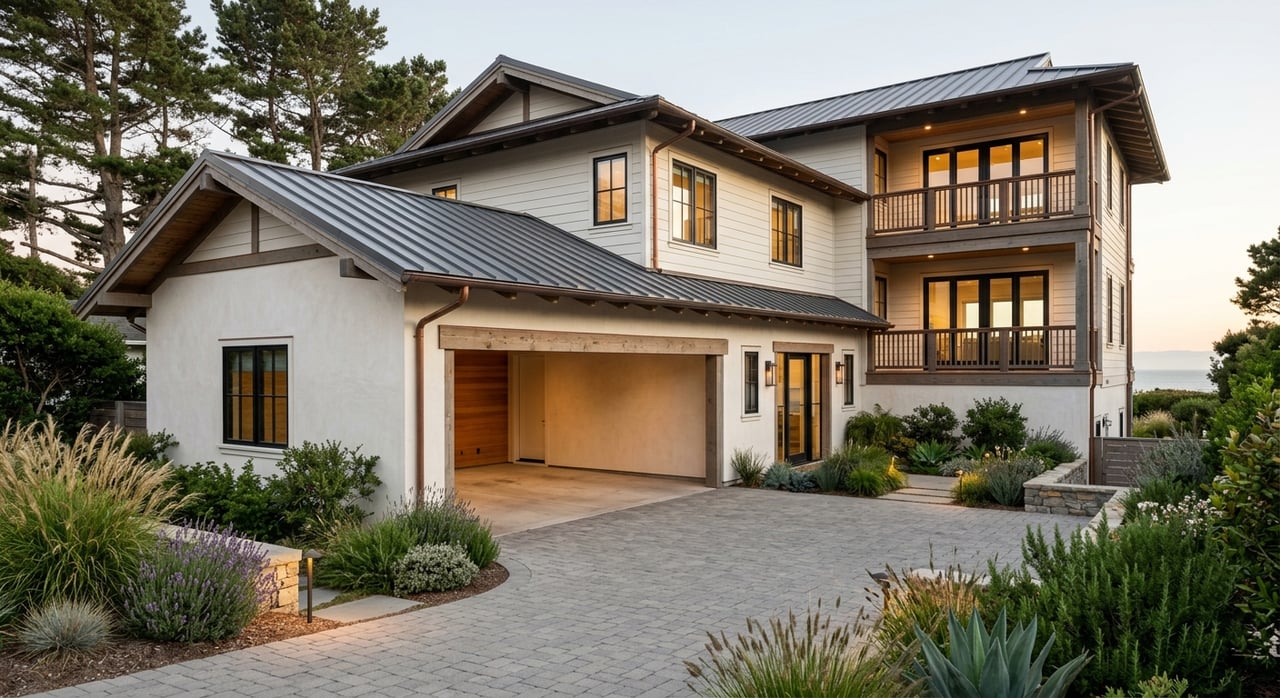
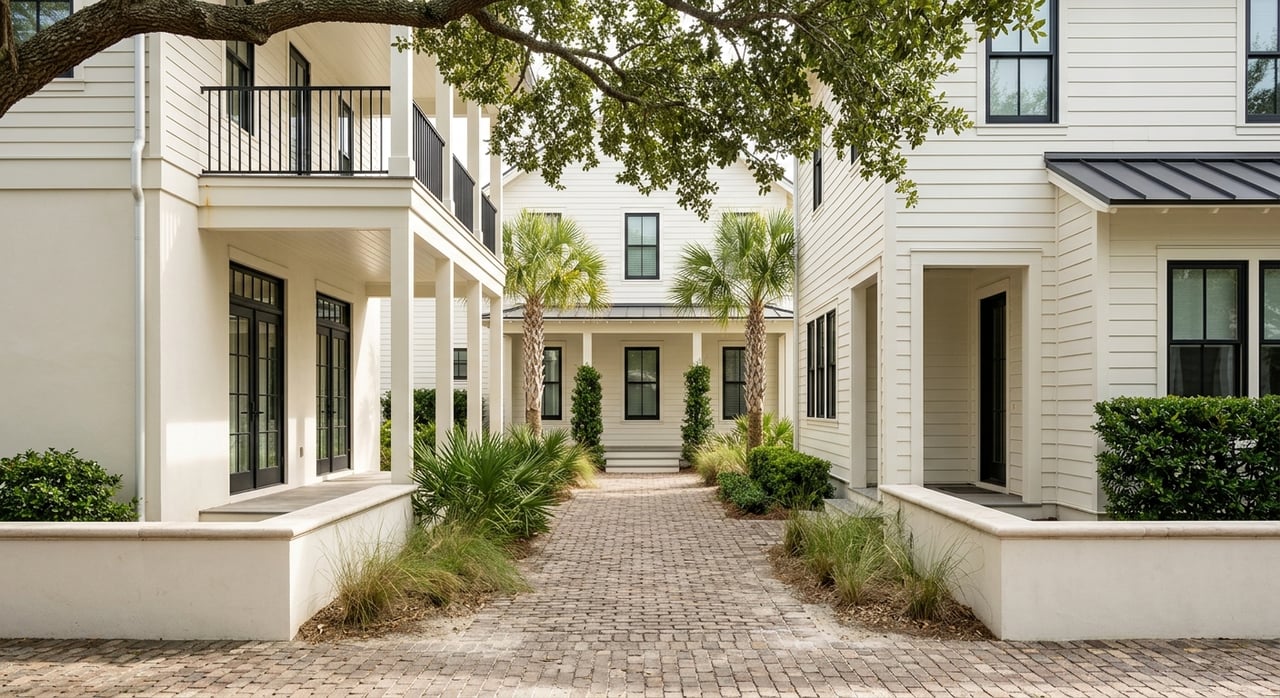
Seaside’s architecture is one of the first things you notice, but the bigger story is how the design supports the lifestyle. The town uses narrow brick-paved streets, white-sand footpaths, front porches, and native landscaping to create a compact, pedestrian-oriented setting, as described on Seaside’s about page.
The visual rules are also carefully guided. The Seaside Code emphasizes wood siding, board-and-batten walls, wood windows and doors, porch-forward facades, white picket fences, and a restrained color palette that gets lighter nearer the Gulf. Civic buildings are reserved for white body color, which helps public spaces stand out without overwhelming the residential areas.
For buyers, that matters because Seaside is not a place where every home tries to compete visually with the one next door. Homes are unique, but they share a common language. That consistency helps preserve the town’s identity and creates a streetscape that feels cohesive rather than random.
The New Urbanism Influence
If you have heard Seaside described as iconic, this is why. Seaside calls itself the first New Urbanist town, and the Congress for the New Urbanism identifies it as a forerunner of the movement’s charter, based on the town history.
In practical terms, New Urbanism means you can expect a community shaped around walking, gathering spaces, and buildings that relate to the street. Front porches face outward. Paths connect homes to public spaces. The town center sits within easy reach rather than requiring a car trip for every meal or errand.
Signature Seaside Landmarks
A few buildings and structures help define Seaside’s character. The Seaside Interfaith Chapel is described by the town as its tallest building, with a steeply pitched roof, board-and-batten wood walls, heart pine floors, and abundant windows.
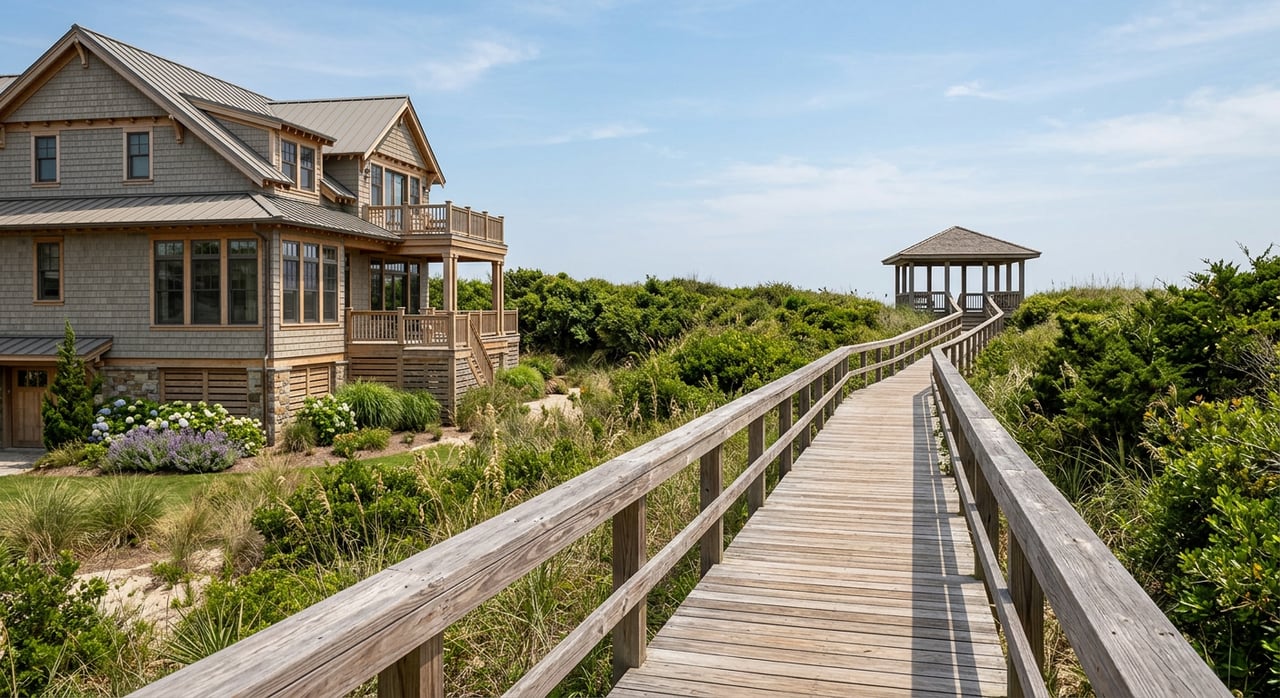
Along the Gulf, the nine beach pavilions are some of Seaside’s most recognizable features. These are not simple dune walkovers. They function as sculptural landmarks and beach access points, giving different parts of town a memorable connection to the shoreline.
Central Square and Town Life
Seaside’s town center is one of its biggest strengths, especially if you value a low-car lifestyle. According to Seaside’s official overview, the best shopping and dining are within a five-minute walk of all residences and The Court, with Central Square serving as the civic and commercial heart of the community.
That setup changes how a day can unfold. Instead of planning around parking and traffic, you can move between home, the beach, dining, and events on foot. For many buyers, that is a major part of Seaside’s appeal.
The Amphitheater and Lyceum Lawn
The town center is not only about restaurants and shops. The amphitheater and Lyceum Lawn host concerts, movies under the stars, theater, school PE, and reservable events, based on Seaside’s about page.
This gives the center of town a true civic role. It is a place people use, not just a backdrop. If you are considering a second home or full-time coastal home, that kind of shared public space often plays a big role in how connected a place feels over time.
A Walkable Daily Rhythm
Seaside also has recurring events that keep the town center active throughout the week. Its curfew and programming page notes weekly Children’s Theater, kids’ concerts, a DJ residency, a Saturday farmers market, and Central Square Cinema, all supporting a family-friendly evening environment.
For you as a buyer, that means Seaside offers more than beautiful homes near the Gulf. It offers an established rhythm of activity in a compact footprint. That can be especially appealing if you want a home in a place that feels lively without relying on constant driving.
Beach Access in Seaside
In Seaside, beach access is closely tied to the pavilion system. According to Seaside’s FAQ and spring memo, vacation rental guests receive access to the pavilion on their street, while members of the public can use the Coleman Pavilion by booking through Cabana Man.
That is an important detail if you are comparing Seaside with other 30A communities. Access is not simply a matter of being nearby. Understanding how the pavilions function can help you evaluate both lifestyle use and guest experience if you are considering a second home or an income-producing property.
The Role of Coleman Pavilion
The same Seaside guidance identifies Coleman Pavilion as the central beach access point for locals and visitors. It plays a key role in how public users experience the beach in town.
It is also worth noting that the former Van Ness Butler Regional Beach Access between Seaside and WaterColor is no longer a public access point, according to Seaside’s official FAQ. For buyers, this is one more reason to verify access details early when narrowing down a property search.
Getting Around Without a Car
One of Seaside’s biggest lifestyle advantages is that you may not need a car much once you arrive. The town was designed to be walkable, with brick streets, footpaths, and a centrally located square, and Seaside’s transportation information notes that many visitors do not need a car once in town.
That can be a major quality-of-life factor if you are looking for a second home with a relaxed routine. It can also matter for buyers thinking about guest appeal, since a walkable layout often shapes how convenient and memorable a stay feels.
For those who do drive, Seaside uses managed parking and a complimentary shuttle from a lot off Highway 331 South to the Lyceum Archway in the center of town. That helps support access while preserving the pedestrian feel that defines the community.
What the Housing Stock Looks Like
Seaside’s housing stock is mostly cottage-scale and privately managed rather than dominated by high-rise buildings. The town’s official history says Seaside now includes more than 300 homes along with restaurants, shops, and galleries.
Seaside also emphasizes that the residences are unique to one another while sharing common neighborhood characteristics. That is a helpful way to think about inventory here. You are not looking at a single repeated product type. You are looking at homes with individual personality inside a larger design framework.
For buyers, this often means the search is less about finding a standard floor plan and more about matching your goals to a specific location, access pattern, and architectural feel. In a place like Seaside, those details carry real weight.
What Beach Living Here Really Means
Seaside beach living is about more than being close to the water. It is about how architecture, public space, and access all work together. You can move from a porch to a footpath, from a footpath to Central Square, and from town to the Gulf through one of the pavilions, all within a compact setting.
That combination creates a lifestyle that tends to appeal to buyers who want a low-car coastal environment with a strong sense of place. Whether you are looking for a personal retreat, a second home, or a property with income potential, Seaside offers a distinct model of 30A living shaped by planning as much as by location.
If you are weighing Seaside against other 30A communities, it helps to look beyond the photos and ask practical questions about beach access, daily walkability, and how the town functions across the year. If you want help comparing options or narrowing in on the right fit, Charity Jeffrey can help you evaluate Seaside with a clear, strategic perspective.
FAQs
What makes Seaside, Florida architecture different from other 30A communities?
- Seaside is known for a tightly guided architectural code that emphasizes wood siding, board-and-batten walls, front porches, white picket fences, sand paths, and a restrained color palette, all designed to support a cohesive town character.
What is the town center like in Seaside, Florida?
- Seaside’s Central Square is the civic and commercial heart of town, with shopping, dining, the amphitheater, and Lyceum Lawn all within an easy walk of residences.
How does beach access work in Seaside, Florida?
- Beach access is organized around Seaside’s pavilion system, with vacation rental guests receiving access to the pavilion on their street and public users able to access the beach through Coleman Pavilion by booking through Cabana Man.
Can you get around Seaside, Florida without a car?
- Yes. Seaside was intentionally designed to be walkable, with brick streets, footpaths, and a centrally located square, and the town also offers managed parking and a complimentary shuttle from an off-site lot.
What types of homes are in Seaside, Florida?
- Seaside’s housing stock is primarily cottage-scale, with more than 300 homes that are individually distinct while still following shared neighborhood design principles.